
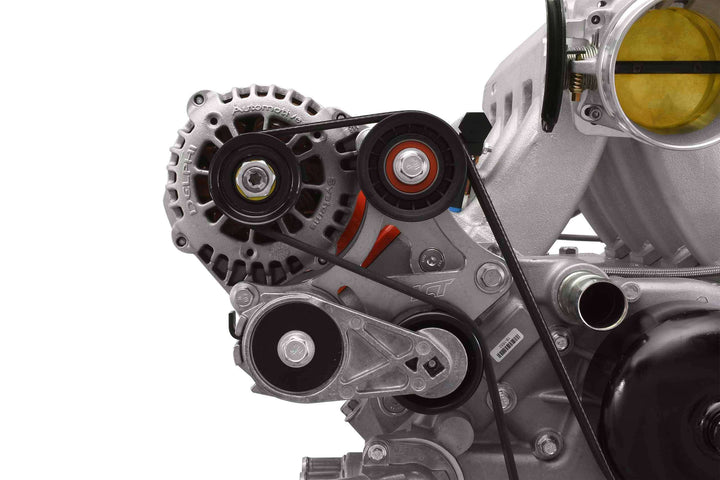
The LS1 engine, renowned for its performance and adaptability, has become a popular choice among car enthusiasts and professionals alike. However, the challenge often arises in maximizing available space and optimizing the engine’s performance. One effective solution is the use of an LS1 alternator relocation bracket, which not only helps in freeing up space but also enhances the overall efficiency of the engine setup. This guide delves into the essentials of using an alternator relocation bracket, providing insights on how it can be leveraged to achieve better performance and space management.
Understanding the Need for Alternator Relocation
In the world of engine modifications, space is often at a premium. The original alternator positioning in many LS1 engine setups can interfere with other components or limit potential modifications. By relocating the alternator, one can:
- Create more room for other engine modifications or enhancements.
- Improve the distribution of weight within the engine bay.
- Enhance the engine’s airflow and cooling efficiency.
For those interested in exploring options, a variety of LS1 alternator relocation brackets are available, designed to meet different needs and configurations.
Types of LS1 Alternator Relocation Brackets
There are several types of relocation brackets, each tailored to specific applications and preferences:
High-Mount Brackets
These brackets move the alternator to a higher position in the engine bay. This setup is advantageous for:
- Clearing space for turbo systems or other low-mounted components.
- Providing a cleaner, more accessible engine bay layout.
High-mount brackets are particularly beneficial in vehicles with limited lower engine bay space.
Low-Mount Brackets
Conversely, low-mount brackets position the alternator closer to the engine’s base. This configuration can be ideal for:
- Maintaining a lower center of gravity.
- Aesthetic preferences for a less cluttered upper engine bay.
Low-mount solutions are often chosen for racing applications where weight distribution is critical.
Installation Considerations
Before proceeding with installation, several factors must be taken into account:
- Compatibility: Ensure the bracket is compatible with the specific LS1 engine model and the vehicle’s overall setup.
- Tools Required: Basic hand tools are generally sufficient, but specialized tools may be needed depending on the bracket type.
- Instructions: Follow the manufacturer”?s instructions carefully to ensure a secure and correct fitment.
Installation can often be done by those with mechanical experience, but professional installation is recommended for those unfamiliar with engine modifications.
Benefits of Using an LS1 Alternator Relocation Bracket
Adopting an alternator relocation bracket can yield several advantages:
- Enhanced Performance: By optimizing engine space, the efficiency and performance of the engine can be improved.
- Improved Accessibility: Engine components become more accessible, simplifying maintenance and future modifications.
- Customizability: Allows for greater flexibility in engine design, accommodating unique setups and configurations.
For those seeking to maximize their engine’s potential, investing in a quality alternator relocation bracket can be a valuable decision.
Conclusion
Incorporating an LS1 alternator relocation bracket into an engine setup is a strategic move for optimizing space and enhancing performance. Whether for racing, customization, or general improvement, understanding the different bracket options and their benefits can lead to more effective engine management solutions. As the automotive world continues to evolve, so too do the tools and accessories available, making it easier than ever to achieve the desired balance of performance and efficiency in an LS1 engine setup.